Showing posts with label Physical. Show all posts

Tuesday, December 16, 2014

Symptoms and Treatment of the Common Cold

The Common Cold


Around this time of year, it seems like everyone starts to come down with a cold. However, there are a lot of different ideas about what causes colds and how to treat them. The following information will help you to identify and treat the common cold.

Background


The common cold is a viral infection that causes inflammation of the upper respiratory tract. It is the most common infectious disease among people of all ages. Although the common cold is benign and self-limiting, it can lead to secondary bacterial infections.


A cold can be spread two days before the carrier is aware of any cold symptoms. Usually, transmission occurs through airborne respiratory droplets and occasionally from objects contaminated with respiratory droplets. Children serve as the main reservoir for respiratory viruses. They commonly acquire new strains from schoolmates and pass them on to family members.


Signs and Symptoms


After a 1 to 4 day incubation period, the common cold produces symptoms such as:

  • sore throat and/or pharyngitis
  • nasal congestion
  • Burning, watery eyes
  • Fever (more common in children)
  • Headache
  • Cough
  • Achiness
  • Fatigue and weakness
  • Enlarged lymph nodes
Secondary infections can result from a cold and need medical attention. A clinician should be seen if any of the following symptoms occur:


  • Chest pain that persists
  • Earache
  • Severe or long-lasting sore throat
  • Coughing up thick mucus or rust-colored sputum
Many sore throats are not serious and resolve in time. However, there are potentially serious types that require specific measures. The most potentially serious sore throat, strep throat, is fairly common. This type of pharyngitis has potential to develop into heart and/or kidney disease.

Treatment


There is no cure for a cold because it is a viral infection. Primary treatment is purely symptomatic:

1. Rest.
Plenty of rest allows the body to use the energy it needs to manufacture antibodies for killing viruses. 
2. Fluids
Increase daily fluid intake to more than 1-2 liters. Liquids are needed to thin and loosen mucus secretions. Avoid milk and soda.
3. Proper Diet
Do not "starve" a cold. Eat light, well-balanced meals.
4. Gargles
Gargle deeply to cleanse and heal the throat 2-4 times a day. Dissolve 1/4 of a teaspoon of honey in half a mug of warm water.
5. Humidifier
Cool, moist air from a humidifier helps break up congestion and thins secretions. Warm baths and showers are soothing. A hand towel wrung out with hot water and placed over the eyes and sinuses can also be soothing.

6. Medications
Pain relievers (aspirin, acetaminophen, and ibuprofen), decongestants, and cough medications can all help relieve symptoms of the common cold.

Prevention


To prevent getting sick, avoid close contact with sick people, maintain a healthy diet, and wash your hands! The proper way to wash your hands is as follows:


First, wet your hands and apply liquid or clean bar soap. Place the bar soap on a rack and allow it to drain. Next, rub your hands vigorously together and scrub all surfaces. Continue for ten to fifteen seconds. It is the soap combined with the scrubbing action that helps dislodge and remove germs. Rinse well and dry your hands with a clean towel. 


Sources:

Student Health Center. Common Cold [Brochure]. Rexburg, Idaho: Brigham Young University- Idaho
http://drkimfoster.files.wordpress.com/2011/12/common-cold.jpg
http://www.futuretimeline.net/21stcentury/images/cure-for-the-common-cold-2020-2025.jpg
http://www.teluguone.com/tonecmsuserfiles/Treatment%20of%20Common%20Colds%20in%20Children(1).jpg?__SQUARESPACE_CACHEVERSION=1349229591339
http://www.urgentcare.com/news/wp-content/uploads/2014/10/Healthy-Tips-for-Cold-and-Flu-Prevention-and-Treatment-2.jpg
http://knoxvillecpr.com/wp-content/uploads/2014/10/WASHING-HANDS.jpg


Tuesday, December 9, 2014

Lower Back Pain

What to Do About Lower Back Pain


Four out of five adults will experience a bout of back pain at some time in their lives. You can ward off back problems by following the simple steps listed below. Even if you've injured your back before, you can learn techniques to help you avoid recurrent injuries. The good news is that most episodes of back pain last only a short time, and less than one percent of back problems require surgery.

Back pain can occur for no apparent reason and at any point on your back. Lack of muscle tone and excess weight commonly cause and aggravate back pain. Poor posture adds stress too. When you slouch or stand with a swayback, you exaggerate your back's natural curves. Any imbalance can stress muscles and joints, causing fatigue and injury from overuse.

From the simple backache to more serious back problems, common sources of pain include: muscle strains and spasms, sciatica, osteoporosis, injuries and accidents, and fibromyalgia.

Home Remedies


1. Rest
Lie on your side on a firm mattress with a pillow between your knees, or lie on your back with you feet up on a chair or with a pillow under you knees.

2. Ice
Ice can reduce pain and swelling. Immediately after any injury, apply ice several times a day but for no longer than twenty minutes at a time. Put ice in a plastic bag and wrap the bag in a thin cloth to keep a barrier between your skin and the ice.

3. Medication
Use over-the-counter anti-inflammatory medicines (like Ibuprofen or Advil) to reduce inflammation or use pain relievers like Tylenol (acetaminophen).

4. Exercise
Patients should begin mild aerobic exercise such as aerobic walking (preferably on grass or other softer surfaces) and stationary biking as tolerated. Exercise keeps the muscle tone intact and increases blood supply to the affected area. If sitting for a long period of time, get up and move around periodically and stretch.

Prevent Back Problems By...

Correcting Daily Posture


 When you sit, use a chair with lumbar support and a firm seat. While driving, have the seat close to the steering wheel. Keep knees flexed as much as possible and keep the seat tipped back slightly.
Don't stand or walk bending forward, and use leg muscles to lift and carry. Do not overload your back with a heavy pack, and make sure the weight is evenly distributed on both shoulders.
Don't slouch! Imagine a string is pulling you up from the top of your head, keep your core slightly engaged, knees slightly bent, and your tailbone tucked in.

Correcting Sleeping Posture


If you are sleeping in a position that puts undue stress on your back, it will have lasting effects, since your back is in this position for 6-9 hours every night. The positions with the least amount of stress on your back, as mentioned above, are on your side with a pillow positioned between your legs (to prevent you from rolling over onto your stomach and to help take the pressure off your spinal column) or on your back (firm bed) with a pillow under the knees.


For persistent pain, get professional care. In rare cases, back pain can signal serious medical problems. Contact your doctor immediately if your back pain is the result of a fall or blow to your back. Also, be on the look out for weakness or numbness in one or both legs.

If you've tried home remedies for several weeks but still have pain, your doctor may be able to pinpoint the source of your pain and may refer you to a physical therapist that can help you in several ways, including teaching you exercises that can help you stretch, strengthen, and protect your back.


Sources:

Student Health Center. Lower Back Pain [Brochure]. Rexburg, Idaho: Brigham Young University- Idaho
http://www.backandneck.ca/wp-content/uploads/2012/09/relieving-lower-back-pain.jpg
http://www.knowabouthealth.com/wp-content/uploads/2009/10/ice-back-pain.jpg
http://www.raphysicaltherapy.com/images/posture.jpg
http://static5.businessinsider.com/image/5321e6f36da811cf28760448-1000-559/shutterstock_107926484.jpg
http://photos2.demandstudios.com/dm-resize/photos.demandstudios.com%2Fgetty%2Farticle%2F88%2F163%2F200273482-001_XS.jpg?w=400&h=10000&keep_ratio=1

Tuesday, November 18, 2014

What You Need to Know About Ebola

Everything You Need to Know About Ebola


The Ebola outbreak of 2014 is the largest in history, and there have been confirmed cases in the United States. About half of the people who have been diagnosed with Ebola in this outbreak have died, making it all the more important for you to know what you're dealing with.

The following are some important items of information that you need to know about the Ebola virus.

1. A person infected with Ebola can't spread the virus until symptoms appear. 
The incubation period for Ebola is, on average, 8 to 10 days. Signs and symptoms include: fever, severe headache, muscle pain, vomiting, diarrhea, stomach pain, or unexplained bleeding or bruising.

2. Ebola is spread through direct contact with bodily fluids. 
Bodily fluids including urine, feces, saliva, vomit, blood, and sweat, are the means by which Ebola is spread. Objects, like needles, that have been contaminated by these fluids are also a source of infection. Ebola is NOT spread through air, water or food.

3. There is currently no vaccine available to protect against Ebola. However, there are some things you can do to prevent infection:

  • Wash hands often with soap and water or an alcohol-based hand sanitizer.
  • Do not touch the bodily fluids of a person who is sick.
  • Do not come into contact with items that have been touched by a sick person's blood or bodily fluids.
  • Don't touch the body of someone who has died of Ebola
4. You may be at risk for Ebola if you have traveled to an area with an Ebola outbreak and:

  • Had direct contact with blood or bodily fluids or items that came into contact with blood or bodily fluids of a person infected with Ebola.
  • Touched bats or nonhuman primates (like apes or monkeys) or blood, fluids, or raw meat prepared from these animals.
  • Went into hospitals where Ebola patients were being treated and had close contact with these patients. 
  • Touched the body of a person who died of Ebola.*
If any of these points applies to you, you should check for signs and symptoms of Ebola for 21 days. Do this by taking your temperature, watching for other symptoms (listed above). Get medical care right away if you have a fever or any other of the signs and symptoms listed above. Be sure to call and explain your travel history BEFORE you go to the doctor's office or emergency room.

5. Despite what you may think or hear, U.S. hospitals and authorities are equipped to handle Ebola. They have the ability to identify exposed people and take the necessary steps to avoid spreading the virus further. Though even a single case of this highly dangerous virus is considered a threat, it is unlikely that this outbreak will turn into an Ebola epidemic.


*list taken directly from the CDC website


Sources:

http://www.cdc.gov/vhf/ebola/pdf/what-need-to-know-ebola.pdf
http://www.berkeleywellness.com/healthy-community/contagious-disease/slideshow/10-ebola-myths-discounted
http://i.huffpost.com/gen/2097108/thumbs/o-EBOLA-VIRUS-facebook.jpg


Tuesday, October 28, 2014

Skinny Fat

Why You Should Still Care About Your Health, Even if You're "Thin"


So your weight is within the normal BMI (Body Mass Index) range, and you fit into your size small or medium clothes just fine. Why do you need to worry about nutrition or exercise if you seem to feel and look "healthy?" It turns out, that even though an individual has a normal weight and size, a poor diet can cause them to have unseen health problems. Failure to maintain a healthy diet and exercise plan allows your body to assume the state of being “skinny fat.”

Let's Talk About Fat


Eating a diet consisting of high sugar content, processed foods, and solid fats leads to the storage of what is called visceral fat. Visceral fat is the fat that is stored in your abdomen in between your organs. There are two main kinds of fat: subcutaneous fat and visceral fat. Subcutaneous fat is the kind that is stored just beneath the skin. It can be found in your stomach, arms, neck, and even the soles of your feet. This kind of fat is healthy and essential in moderate amounts. Too much can lead to overweight and obesity, which come with a host of problems. However, the hidden killer is visceral fat.

Visceral fat wraps around your inner organs-- the heart, liver, lungs, and other major organs. Carrying excess amounts of visceral fat can be one of the symptoms of metabolic syndrome. This disease provides a host of other symptoms such as high blood pressure, high cholesterol, and elevated insulin levels.  Having visceral fat has also been linked to stroke, heart disease, diabetes, breast cancer, and dementia, among other adverse health conditions.

The problem with visceral fat is that it can be hiding even in relatively thin people. This means that even those who think they're safe and attribute genetics to their physique are not safe from the negative effects of a poor diet. Weight is simple a clue that doctors look for to indicate the state of an individual's health. However, it’s not the be-all-end-all diagnosis. In fact, when a thin person is diagnosed with diabetes they have twice the risk of death compared to that of an overweight person diagnosed with the same disease.

Look at it this way: some cars show their age and you can tell how old it is by the exterior. However, some cars look to be in deceivingly good condition-- until you check under the hood.

What To Do


Whether you feel you need to lose a few pounds or you haven't ever thought you needed to worry about your weight, everyone should strive to eat better and exercise. Eat a diet full of a variety of fruits and vegetables. They should take up half your plate or more. Cut down on added sugars such as soda pop and sugary treats, and choose lean protein instead of bacon or red meat. Avoid processed foods (most things in a package) as much as possible, as these can contain significant amounts of added sugars and extra fat. Additionally, it is important to have whole grains in your diet. This includes whole wheat bread, brown rice, whole wheat pasta, oatmeal, and quinoa.
 Try to find ways to be more active that you enjoy. If you hate working out, do Zumba or play a game of soccer with your friends/family. The recommended guideline for the average person is to do 150 minutes a week of moderate activity (rule of thumb: you can still talk while you're doing the activity, but not carry on a conversation easily). Incorporate resistance training into your life (lifting, pushing, and carrying heavy things). This will add to your muscle stores so that you have the strength to do your daily tasks well into your old age, as well as increasing your resting metabolism so that you burn more calories at rest.

All of these tips will help prevent you from developing problems down the road from fat you didn't even know you were accumulating. If you're concerned you might be "skinny fat," have your provider test your blood sugar, blood pressure, triglycerides, and blood cholesterol levels. These results will give a good basic picture of your current state of health.


Sources:

http://www.womenfitness.net/wfimgank8/emo_wt_loss.jpg
http://www.prevention.com/weight-loss/flat-belly-diet/flat-belly-diet-subcutaneous-and-visceral-belly-fat
http://time.com/14407/the-hidden-dangers-of-skinny-fat/
http://www.huffingtonpost.com/dr-mark-hyman/skinny-fat_b_1799797.html
http://www.weightlossforall.com/wp-content/uploads/2010/08/visceral-fat.jpg
http://elanperformance.com/wp-content/uploads/2013/06/healthy-habits.jpg

Tuesday, July 22, 2014

Running Low on Energy?


With finals coming up, you may have noticed you are feeling a lot more tired. Chances are you have been switching out sleeping time for studying time and forgetting to eat – both of which may take your stress levels to the highest they've been all semester. You are exhausted. Finals can pay a heavy toll on our health and well-being. Some people may not realize it but their feeling of fatigue may not just be from the stress of finals. The following tips are useful in identifying ways in which energy can be boosted or drained.


Reasons Your Energy May Be Low
  • You are not drinking enough water. 
  • You don't eat breakfast. There is a reason why everyone says breakfast is the most important meal of the day. When breakfast is skipped, the bodies metabolism is slow and does not get started as soon as it should. You also need to start your day by fueling up. 
  • You stay up late. It is important to have a sleep schedule in which you get adequate sleeping time.
  • You are eating too many sugars and fats.
  • You are stressed.  

Tips to Boost Your Energy
  • Get at least 7-9 hours of sleep every night.
  • Exercise at least 20 minutes a day. 
  • Keep a nutritious diet. Eat a balance of protein's, vegetables, fruits, and carbohydrates. Try to make sure your carbohydrates consists of whole wheat, whole grains, and high in fiber. 
  • Take a break from your studying for personal time. This may help in managing your stress.  
Good luck on finals and have a safe and healthy summer! 

For more tips check out our Fatigue handout by  following the link below.
BYU-Idaho Student Health Center


 Resources:
Student Health Center. (2012) "Nutrition and Hydration" Patient Education. 
Samadi, David B. (2014) "5 Habits That Are Draining Your Energy" Fox News. Retrieved from http://www.foxnews.com/health/2014/07/09/5-habits-that-are-draining-your-energy/

Tuesday, June 24, 2014

Safe Exercise Strategies


Now that summer is almost here, people are getting out and exercising more often. Exercise can have substantial health benefits, such as prolonging our lives, improving our immune system, and boosting our energy. While exercise is good for us it can be harmful if not done correctly. No matter if you are a recent participant in exercise or a master athlete, there will always be risk for injury. When faced with a goal or deadline that is near, we often push ourselves too hard or fast, which can potentially result in injury. While there will always be a risk for injury, you can still take precautions to prevent them from happening.

Tips for Preventing Injury

  1. Set Realistic Goals: You cannot lose fifty pounds in two weeks, so set goals that challenge but can actually be achieved.Additionally, be specific with your goals instead of being vague or unclear. Eg: “I plan to run a mile in less than seven minutes this week.” instead of “I want to improve my mile time.”
  2. Don't Overdo It: This most common cause of injury is pushing yourself too much. Instead of just jumping in a lifting 150 lbs, work your way up to it. Start at a low intensity and gradually increase it with each workout.Use the 10% rule when working out—do not increase your training load such as time, intensity, or distance by more than 10% each week
  3. Pay Attention to any Pain: "Feel the burn, love the burn", "no pain, no gain" we often hear these said while working out and while we should feel some burning and maybe slight pain while working out pay attention. If the pain is continuous or occurs in the chest of neck area this is not beneficial. General muscle soreness is fine but it may indicate that you are not warming up sufficiently or you are exercising too long/strenuously. 
  4. Control Your Movements: Keep you movements under control. Anything that is rapid or jerky movement can result in an unwanted injury. If you cannot keep control of your movements, slow things down and exercise at a more moderate pace. 
  5. Watch Your Form: Poor form and posture during a specific exercise can result in a torn or strained muscle along with damage to your joints.By keeping your back aligned and straight, knees at the correct angle for movements, and tucking your buttocks, you can prevent injury. These are most important if lifting above your head, jumping, or squatting.   
  6. Don't Bounce While Stretching: "Ballistic" stretching  is when you bounce in and out of a stretched position. While it is thought to be beneficial to your flexibility, it can also increase your chance of muscle tears and soreness. Switch out ballistic for static stretches to prevent these injuries. Static stretching, in which you gradually stretch to a full range of movement, will help loosen muscles without straining them. 
    It is also important to warm up before you start stretching. This can be done with a brisk walk or light jog.

     
  7. Use Good Footwear: Wearing improper shoes that are worn out, do not fit right, or provide no support can add stress to your hips, ankles, and feet. This is where the majority of sports injuries occur. Choose shoes that are fitted to you and replace them when they become worn out. 
  8. Go Low Impact: Try to stick with the gliding or marching motion that is not as hard on your joints versus the jolting up and down movements. This can protect your back, calves, shins, ankles, and knees from injury.  
  9. Drink Up: Keep hydrated and replace any fluids that you may have lost during a workout. If your are working out in any hot weather this is especially  important to keep from over heating. Heatstroke can be extremely dangerous. Even if you are not thirsty try to drink a gulp or two of water in between intervals.  


References:
http://www.berkeleywellness.com/fitness/injury-prevention/slideshow/9-safe-exercise-strategies

Tuesday, May 27, 2014

Early Physical Exercise and it's Influences Later in Life


We all dread getting old. Your body begins to fall deteriorate, your mobility is lessened, and your mind slowly fades. What if you could prevent this or at least slow down the process significantly? You may not realize it, but the physical fitness that you do today not only affects your life right now, but will make a significant difference in the way you age. The more physical we are now, the better physical health we will have later on in our life. As we exercise more, our body and immune system will get stronger and function more properly. If we develop habits now, to stay physically active, the chances that we will continue those habits into later adulthood and old age are significantly higher than if we live a sedentary life during our twenties. In recent studies, it has been found that having early fitness can improve our middle age brain (NY times).

As people reach middle age it becomes more frequent to forget names, certain words, or where they left their keys. These midlife experiences strike people later or earlier than others. While it is known that genetics play a role in this, the idea of physical activity and it influence has always been unclear until recently. Dr. David R. Jacobs has just now concluded after a study that the ability to think well during your middle age depends on a large degree of your lifestyle as a young adult. "It looks like the roots of cognitive decline go back decades," said Dr. Jacobs. With that in mind think to yourself: how active are you? Are you living a physically active lifestyle or significantly sedentary? To help see how you compare to others your age here are some ways in which to compare your physical physique with others your age.

Body Mass Index  

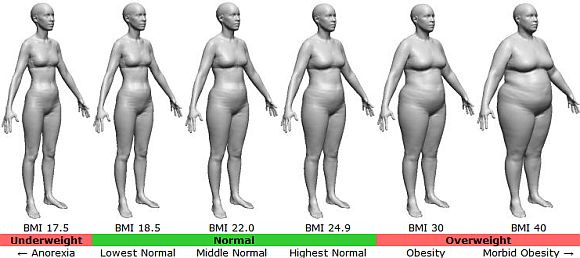
Body Mass Index (BMI) is calculated from a person's weight and height. BMI is a somewhat reliable way to calculate an accurate body fat percentage. It is not as accurate as other methods, but this gives you an idea as to where you fall under. Your BMI is calculated using the following formula:
weight(kg) / (height(m) x height(m))
When you calculate your BMI, you can compare it to the chart according to your gender to see where you lie with the rest of the general population.                                                                                                                               


BMI
Weight Status
Below 18.5Underweight
18.5 – 24.9Normal
25.0 – 29.9Overweight
30.0 and AboveObese


Measurement Units
Formula and Calculation
Kilograms and meters (or centimeters)Formula: weight (kg) / [height (m)]2
With the metric system, the formula for BMI is weight in kilograms divided by height in meters squared. Since height is commonly measured in centimeters, divide height in centimeters by 100 to obtain height in meters.
Example: Weight = 68 kg, Height = 165 cm (1.65 m)
Calculation: 68 ÷ (1.65)2 = 24.98
Pounds and inchesFormula: weight (lb) / [height (in)]2 x 703
Calculate BMI by dividing weight in pounds (lbs) by height in inches (in) squared and multiplying by a conversion factor of 703.
Example: Weight = 150 lbs, Height = 5'5" (65")
Calculation: [150 ÷ (65)2] x 703 = 24.96

How does your physical ability compare?

The Presidents Test consists of varied physical challenges that you can complete. By comparing your time or amount completed you can see how you compare to the general population. 

Follow the link below with the following information to see what percentile you fall under. 
PERSONAL INFORMATION
  1.  
  2. Gender *
  3.   yrs
AEROBIC FITNESS
Must enter either a 1-mile walk time and heart rate or enter a 1.5-mile run time.
  1. 1-Mile Walk Time     beats per minute
      lbs * required for result calculation
  2. OR
  3. 1.5-Mile Run Time   
MUSCULAR STRENGTH
  1.   (in one minute)
  2.  
FLEXIBILITY
  1.  inches
BODY COMPOSITION

BMI/BODY MASS INDEX

  1. Enter height in feet AND inches. Enter all fields for a calculation.
    Height   
  2.   lbs
  3.   inches


Resources:
http://well.blogs.nytimes.com/2014/05/07/a-fit-body-at-25-a-fit-brain-at-50/?module=BlogPost-Title&version=Blog%20Main&contentCollection=Phys%20Ed&action=Click&pgtype=Blogs&region=Body
http://www.cdc.gov/healthyweight/assessing/bmi/adult_bmi/
https://www.presidentschallenge.org/challenge/physical/benchmarks.shtml
Google Images

Tuesday, May 20, 2014

Waking Up to the Importance of Sleep


You may not realize it, but sleep plays an essential role in wellness. It is important that you understand the benefits of sleep, as it affects all levels of wellness.

What is a Proper Nights Rest?
It is recommended that adults between the ages of 18-60 get between 7-9 hours of sleep every night. 

Why is it so Important?
Not getting enough rest on a nightly basis can take a heavy toll of your health. Studies have suggested that insufficient sleep is linked to chronic diseases, such as: cardiovascular disease, obesity, and depression (Message Today). Getting enough is crucial in sustaining a person’s overall health and wellness. 

Helpful Tips for Sleeping


Personal Habits: 

  • Set a bedtime and an awakening time. Try to be consistent with the bed time and awakening time. The body "gets used" to falling asleep at a certain time. 
  • Avoid napping during the day. If you nap, limit naps to no longer than 30-45 minutes before 3 pm. 
  • Avoid caffeine 4-6 hours before your bedtime. This includes caffeinated beverages such as coffee, tea, and soda. 
  • Avoid heavy, spicy, or sugary foods 4-6 hours before bedtime. These can affect your ability to stay asleep. 
  • Exercise regularly, but not right before bed. Regular exercise, particularly in the morning or afternoon, can help deepen sleep. However, do not exercise less than 3 hours before you plan to go to bed. Your body is more active after exercise and it can make sleep more difficult. 
  • Avoid electronics at least twenty minutes before you go to bed. 
Environment: 

  • Use comfortable bedding. This is often a source of sleep deprivation. Sleeping on your side with a pillow between your legs has been shown to relieve back pressure and help to create/maintain a comfortable sleep position. 
  • Make sure the temperature is moderate and the room is well ventilated. This will aide in your ability to relax and breathe calmly. Additionally, a comfortable temperature can prevent the body from becoming too hot or too cold during the night. 
  • Reserve space for sleep. You shouldn't use the bed for an office, for reading, or for watching TV. 
  • Block out excess noise. Use white noise generators like a fan or soft radio music to block out ambient noise.
Getting ready for bed:

  • Establish a pre-bed routine. These could include reading, washing your face and writing down things you are grateful for. 
  • Don't take your worries to bed. Write down your concerns or stressors and remove them from you mind for a period of time. 
  • Try a light snack before bed. Some good choices would be a warm beverage and/or light snack such as a banana or a piece of toast. 
  • Practice relaxation methods. Try meditation, deep breathing techniques, or stretching routines prior to sleeping. 


Sweet dreams and happy sleeping!


Resources:
BYU-Idaho Health Center Patient Education Packet
http://www.massagetoday.com/mpacms/mt/article.php?id=14508

Tuesday, May 13, 2014

Seasonal Allergies


       April showers bring May flowers, which bring itchy eyes and congested sinuses. It is finally spring time and we have had our last snow (hopefully). The sun is coming out and the flowers are blooming, releasing their pollen. Every year with the budding and blooming of the plant world comes the sneezing and sniffling of a vast majority of the human population. Sometimes, mistaken as just the flu, seasonal allergies can go undiagnosed for many. For those who have been diagnosed with seasonal allergies, it becomes repetitive battle every year. It can be a struggle to enjoy the outdoors because you are suffering from allergies. To help determine if you are suffering from seasonal allergies and to find relief, here is some information and ideas on how you can get through this year without being slowed down by allergies. 

What are Seasonal Allergies

       Allergic rhinitis, more commonly known as seasonal allergies or hay fever, is an allergic reaction that occurs as a result of your immune system overacting due to a substance that you have inhaled. The most common substance is pollen which is why this allergy usually acts up during the early spring and summer.

Common Symptoms

       Allergic rhinitis can cause many symptoms, including the following:

  • Stuffy, runny nose
  • Sneezing
  • Post-nasal drip
  • Red, itchy, and watery eyes
  • Swollen eyelids
  • Itchy mouth, throat, ears, and face
  • Sore throat
  • Dry cough
  • Headaches, facial pain or pressure
  • Partial loss of hearing, smell, and taste
  • Fatigue
  • Dark circles under the eyes
       *Note: because of the similarity between seasonal allergies and the common cold, it can often go 
 undiagnosed the biggest way to tell if this is a common cold or seasonal allergies is that if it changes with the  season and it is reoccurring every year.  

How to Treat Seasonal Allergies


       There are several ways in which people treat their seasonal allergies. Some people use medication, some use herbal remedies, and others try to avoid exposure to allergens. 

       Drugs and medical treatment:
  • Antihistamines, decongestants, and nasal corticosteroid sprays may help control allergy symptoms.
  • Immunotherapy is a series of  regular injections of an allergen. As therapy goes on, the dosage being given will be slightly larger than the previous shot. Over time, your immune system will develop a tolerance to the allergen and no longer react to it. 
       Alternative medicine:
  • Nasal irrigation is often used by those who suffer from seasonal allergies. Studies have shown that when done three times a day, nasal irrigation can reduce symptoms after 3-6 weeks of treatment. Neti pots, bulb syringes, or squeeze bottles using distilled water are all methods used for nasal irrigation.
  • Acupuncture is still under research but there has been some evidence that suggests that it can help treat individuals with allergic rhinitis. 
  • Using honey with wild flowers has also been known as treatment. Drinking tea or using honey in cooking is thought to help with seasonal allergies. It works like the immunotherapy shots,but in a more natural way. 
  • Other methods such as changing diet and using herbal supplements..  
       Prevention:
       The following tips are to help prevent seasonal allergies from acting up during the time of year when airborne allergens are high:
  • Stay indoors, and close the windows
  • Use an air conditioner in your home and car
  • Avoid the use of fans that draw air in your home and car
  • Don't hang laundry outside to dry
  • Bath or shower and change your clothes after being outside
  • Use an air filter in your bedroom
Resources: 
http://umm.edu/health/medical/altmed/condition/allergic-rhinitis
http://www.sciencedirect.com/science/article/pii/S0091674997701258
Google Images


Tuesday, May 6, 2014

Smalls Steps to a Healthier Lifestyle


      "By all measures, America’s weight problem has grown to epidemic proportions. Only tobacco poses an equally large, potentially reversible, long-term threat to our country’s health and well-being". Cardiovascular disease is an epidemic that can be easily prevented. It just takes us to put forth some effort to make little choices throughout our day that help with our physical health. With our hectic lives sometimes it is difficult to head to the gym or make sure that we get a fully balanced and healthy meal. We tend to sacrifice our good health to get our other daily tasks done. Provided are some small steps that you can do throughout your day that can help you achieve health and wellness but not fall behind on your work load. 

Simple Things to Add to you Daily Routine

  • Take the stairs: Taking the stairs is one way to be more physically active. At work, employees are often presented with a choice between taking the stairs and taking an elevator or escalator. Choosing the stairs instead of the elevator is a quick way for people to add physical activity to their day. 
  • Walk or Bike: If your destination is just a short way walk or bike instead of drive.
  • Park farther away: By parking farther away from the store or office you will be able to add a little more exercise to your day without taking up too much time. 
  • Go for a walk: During your lunch break, in the morning, or at night go for a short walk for ten to twenty minutes this will help you stretch your legs and get some exercise as well as help you refocus on your work.  
  • Stand: When standing you burn more calories and it helps stretch your back and legs. Try to stand as often as you can or take a few minutes and walk down the hall or stand at your desk to raise you heart rate and get the blood flowing. 
  • Workout while you watch: We all love our shows and movies. While you are watching do some stretches or little workouts while you watch. Run up and down the stairs, do push ups, squats, or plank during commercial breaks. 
  • Fit in a quick workout: Before you hop in the shower do a little ten minute workout that gets your heart rate up. Or do some stretches or yoga before you go to bed. 
  • Get a good nights rest: By getting a good nights rest you will be more likely to eat better foods and have more energy to be active the next day. 
  • Prepare meals and portion them out: Do this with meals before hand so that when you are in a hurry you can grab and go but still make sure you eat right and get the nutrients that you need. 
  • Eat before you shop: When shopping on a full stomach it will help you make smart and healthy foods instead of high calorie foods containing sugars and fats. 
  • Learn about food: Spend a little time to get to know nutrition. Learn what foods have nutritionally so that you can learn to make smart choices when eating.
       When these small steps are taken frequently and multiple times throughout the day it adds up. You can be surprised how just a few minutes can make a big difference. The key to living a healthy fit life style is to keep moving. The more you move and are active you will notice that you are more proactive and begin to have an overall better health and wellness. 


References: 
http://www.ncbi.nlm.nih.gov/pmc/articles/PMC1448476/
http://www.cdc.gov/nccdphp/dnpao/hwi/toolkits/stairwell/index.htm
http://www.myplate.gov
google images


Related Posts

Related Posts Plugin for WordPress, Blogger...