Tuesday, January 21, 2014

Healthy Lunches- They will help you cut costs and improve your health.


Are most of your days spent on campus or at work? Do you choose the easy route and buy something at the food court or swing by the closest fast food joint spending as much as $10 for your meal? If the above apply to you than most likely you struggle with something most college students do, preparing unique and healthy lunches.

First of all, you want to make sure your lunch includes the basics, some lean or low-fat protein along with complex carbohydrates this will help sustain your energy until dinner. Connie Diekman, RD, president of the American Dietetic Association says "The combination of protein and fiber from whole grains, beans, nuts, vegetables and/or fruit will give you the most satisfying and nutritious combination of foods that will keep you feeling full until dinner."

 If you tend to have sandwiches often, have a variety of whole wheat or multi-grain products on hand like bread, pitas, and wraps. For your protein source choose things like sliced eggs, tuna fish, reduced-fat cheese or lean meats, all of which are pretty reasonably priced. Then top off your sandwich with lots of vegetables! Include assorted greens, fresh basil, sprouts, sliced cucumbers, onions, and/or tomatoes. In addition to your sandwich, always try to include a fruit like an apple, banana, or an orange which are easy to grab and go.

You don’t have to limit yourself to different sandwiches. This could also be a good time to focus on what you are making for dinner and make enough to have leftovers to take for lunch the next day. Cooking in bulk and making 2-3 different lunch options like chili, or rice and beans and freezing them in ready to go containers for the whole week will help you have options to choose from throughout the week and help you avoid eating fast food. Don’t forget to keep your water bottle filled and drink throughout the day. This will help you curb your appetite and stay hydrated.
Here are some suggestions for Healthy and cheap lunches:

10 Easy Lunch Ideas
American Dietetic Association spokesperson Angela Ginn-Meadow, RD, says planning ahead is essential for quick lunch assembly. "A planned menu with all the ingredients in the kitchen will make it easy to put together tomorrow's lunch after dinner," she says.

She compiled this grocery list for a week's worth of lunches costing $5 or less a day (assuming you already have salad dressings on hand):

  • Whole wheat pita bread
  • Romaine lettuce
  • 2 tomatoes
  • 1 cucumber
  • 1 bag baby carrots
  • 1 bag of apples & oranges
  • 1 can of light tuna in water
  • 1 can of salmon (split for two meals)
  • 1 prepared grilled chicken
  • 3 cans of low-sodium, broth-based soup

With this list of foods, you can prepare:
 

1.   1 pita with lettuce and grilled chicken with light Caesar dressing; baby carrots; and an apple.
 
2.   Salmon lettuce wraps with light sesame Asian dressing; 1 can of broth-based soup; and an orange.
 
3.   Tomato & cucumber salad with olive oil and vinegar; tuna salad on pita; baby carrots; and an apple.
4.   1 can of soup; and grilled chicken on a bed of romaine with sliced apple and light vinaigrette.
5.   Garden salad with salmon, tomato, cucumber, and baby carrots; an orange; and 1 can of soup.
 
Diekman offers 5 more cheap lunch options that are also simple to prepare:

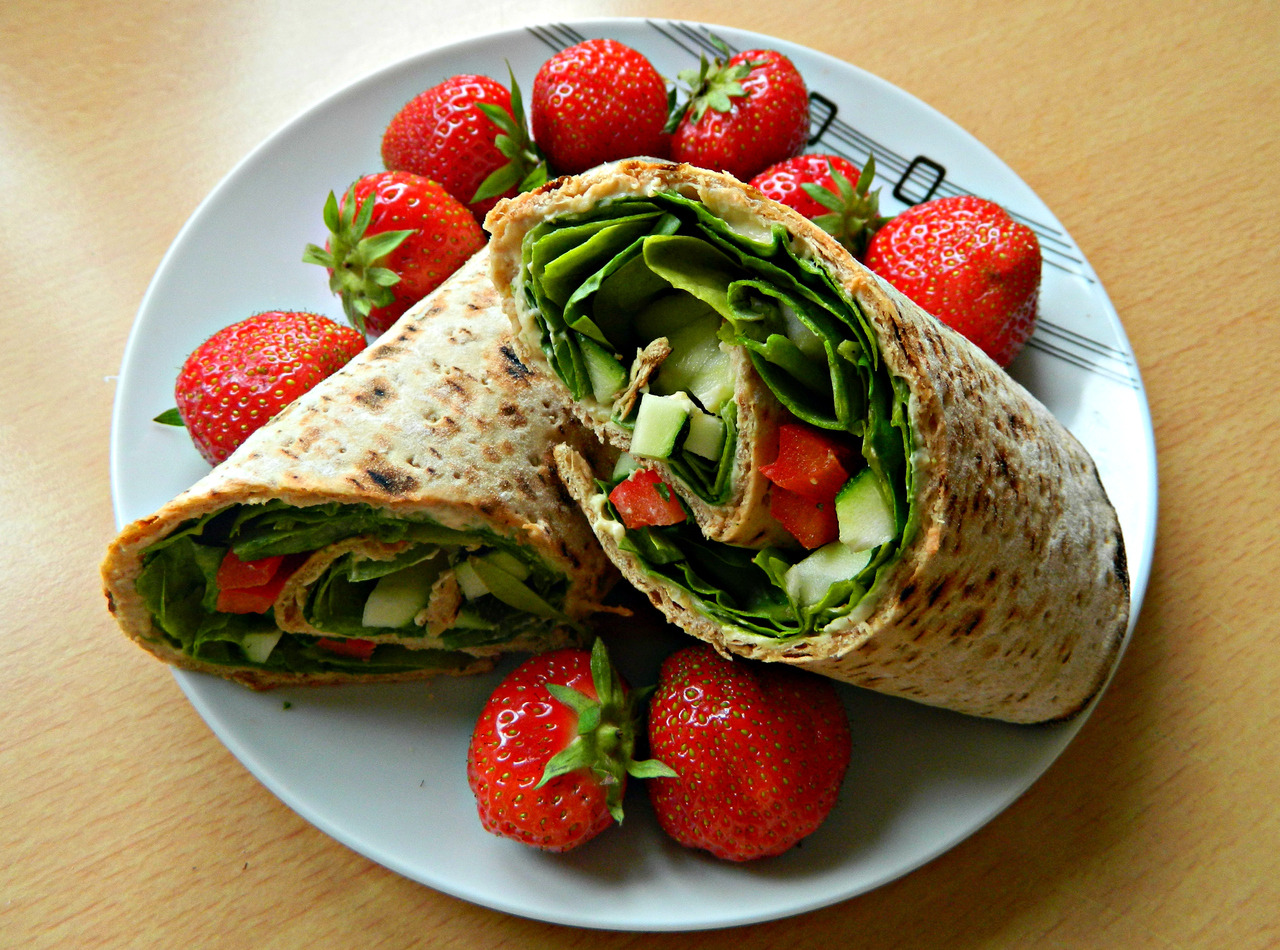
6.   Whole-wheat tortilla wrap of hummus, lettuce, sliced tomatoes, feta cheese and black olives; plus a carton of fat-free vanilla yogurt, and berries.

7.   Whole wheat pita stuffed with vegetarian re-fried beans, salsa, lettuce and shredded cheddar cheese; and apple slices with peanut butter.

8.   A green salad loaded with canned chunk light tuna, carrot strips, pepper slices, tomato wedges, red beans, and dried cranberries topped with balsamic vinaigrette; with a cup of low fat chocolate milk.

9.    A peanut butter and banana sandwich on whole wheat bread; a piece of fresh fruit; and low fat yogurt.

10.   Whole-wheat tortilla roll with sliced turkey, sliced low-fat mozzarella cheese, red pepper strips, and lettuce leaf (chill and slice into bite size pieces); with fruit salad and a glass of skim milk.

 
sources:
http://www.webmd.com/food-recipes/features/cheap-and-healthy-brown-bag-lunch-ideas-for-grownups

Tuesday, January 14, 2014

Is This the Year For the New You?


          At every New Year’s start 62% of Americans sit down and reflect on how far we have come in the past year, our accomplishments, our failures, and our dreams. Take a moment to reflect on your past New Year’s resolutions. Did you meet them? One of them? Or none? Of those that set goals 49% have infrequent success and 24% never succeed and fail each year. Why even bother making resolutions? Well it’s been shown that people who make explicit resolutions are 10 times more likely to reach their goal(s) by the end of the year!  

6 Components can help you write an attainable goal:

1.     Let’s be real: Write your goal based on your interests, abilities, needs, and desires. If you make a goal that is not in your areas of interest or you have no desire to accomplish, it’s probably not going to happen. Don’t make wishy washy goals; make them realistic.

2.     Believable & Possible: A dream is just a goal with a plan to get in motion. Believe that you can reach your goals and set a date you want to accomplish them by. Post them in an area you will see them daily!

3.     Measurable: You should be able to measure your goals progress. Make a time line of how much progress you would like to see by specific dates. This makes it easier to determine when you’ve reached your goal.

4.     Be Flexible: Goals are hard to accomplish especially if it is changing a specific behavior or creating a new habit. You will have conflicts at some point in your plan for reaching your goal. Allow some flexibility, it’s not the end of the world if you miss a day or two at the gym; there’s still another 5 days to have success. If more problems arise, reassess your plan so that you can feel confident in reaching your goal.

5.     Stay in Control: Set goals that you can determine yourself. For example, when, where, and how long you want them to last. They can be short term or long term. This is your opportunity to make yourself happier and healthier. No one should be setting your goals for you!

6.     Keep it Ethical: All of your goals and plans to reach them should in no way cause harm to others, take advantage of others, or compromise your values.

Now go out and make your life better. You can achieve your dreams!

Common Resolutions:
·        Lose Weight

·        Volunteer to Help Others

·        Get a Better Education

·        Get a Better Job

·        Save Money

·        Get Fit

·        Eat Healthy Food

·        Manage Stress

·        Manage Debt
 
·        Take a Trip
 
·        Reduce, Reuse, and Recycle


Wednesday, December 18, 2013

CHRISTmas Favorites

This Christmas, take some time to remember the reason behind the season.  Check out some of our favorite Christmas videos from the last few years!

The Reason Behind Christmas

Christmas Spirit

Kids and Christmas

Wise Men Still Seek Him

What Child is This?

O Come, Emmanuel

Angels We Have Heard on High

2013 LDS Christmas Devotional

Tuesday, December 10, 2013

Vegetables: Raw or Cooked?

Everyone knows vegetables are good for you.  Below, are the recommendations for daily vegetable intake if you do 30 minutes or less of exercise a day.  If you exercise more, you may need to increase your food intake to match the calories you burn.

Daily Recommendation
Children
2-3 years old
4-8 years old
1 cup
1 ½ cups
Girls
9-13 years old
14-18 years old
2 cups
2 ½ cups
Boys
9-13 years old
14-18 years old
2 ½ cups
3 cups
Women
19-30 years old
31-50 years old
51+ years old
2 ½ cups
2 ½ cups
2 cups
Men
19-30 years old
31-50 years old
51+ years old
3 cups
3 cups
2 ½ cups

Did you know that to get the daily recommendation of vegetables, you can eat them raw, cooked, frozen, or canned?  Did you also know that some vegetables are better for your health if you eat them a certain way?  Here are a few popular vegetables and a look at how heat affects some of their nutrients.

Tomatoes- Cooking significantly increases the amount of lycopene found in tomatoes so cooked or canned tomatoes can actually be better for you.  The lycopene increases because cooking breaks down the cell walls which releases nutrients.

Peas- When canned, they lose 85-95 percent of their Vitamin C.
            In general, Vitamin C is usually higher in frozen vegetables than fresh.

Mushrooms- Cooking brings out their potassium.


Onions- Cooking onions release flavonoids which can help prevent heart disease but it decreases the amount of phytonutrients which help curb your hunger.

Carrots- According to the Carrot Museum in England, there are many, MANY pros and cons to both ways.  Their suggestion is to just eat carrots, no matter how they are prepared.  Cooking does help break down the cell walls and increases the bioavailability of some nutrients (beta carotene which converts into Vitamin A), however it decreases most of the Vitamin C.

Spinach- Cooking will provide higher amounts of iron, calcium, fiber, Vitamin A and E.  Eating raw will provide more folate, Vitamin C, and potassium.

As you can see, there are pros and cons to cooking any vegetable.  Don’t fall into the trap that cooking decreases the nutrition of all fresh foods because it can enhance nutrition as well.  The best thing for your diet is to eat a variety of fresh and cooked vegetables.  Taste can be just as important because if you don’t like the taste of a vegetable, you won’t eat it.  So cook them however you will eat them!

Sources:
Campbell, M. (2013). Cooked vs. raw spinach for iron content. Retrieved from http://healthyeating.sfgate.com/cooked-vs-raw-spinach-iron-content-1420.html
Dr. Furhman. (2013). Raw vs cooked. Retrieved from https://www.drfuhrman.com/faq/question.aspx?sid=16&qindex=4
Dr. Oz Fans. (2011, January 4). Dr oz: Is it better raw or cooked? carrots, onions & red pepper. Retrieved from http://www.drozfans.com/dr-ozs-advice/dr-oz-is-it-better-raw-or-cooked-carrots-onions-red-pepper/
Health. (2013). Raw or cooked: Which vegetables are healthier?. Retrieved from http://www.health.com/health/gallery/0,,20667296_2,00.html
Parker-Pope, T. (2013, October 10). Ask well: Does boiling or baking vegetables destroy their vitamins?. Retrieved from http://well.blogs.nytimes.com/2013/10/18/ask-well-does-boiling-or-baking-vegetables-destroy-their-vitamins/?_r=2
United States Department of Agriculture. (2013).Vegetables. Retrieved from http://www.choosemyplate.gov/food-groups/vegetables.html
World Carrot Museum. (2013, November 10). Carrots nutrition and good health: Pigment power. Retrieved from http://veganismisthefuture.com/tag/vegetables/ 
Pictures: http://veganismisthefuture.com/tag/vegetables/

Related Posts

Related Posts Plugin for WordPress, Blogger...